A thumbs-down for looking for work
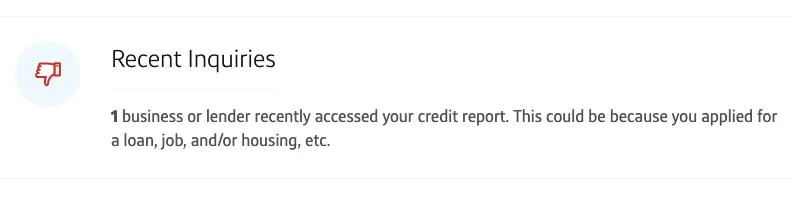
That’s Capital One’s CreditWise. To be clear, that inquiry is me: I applied for credit. Fair enough. But read the wording under the red thumbs-down. This could be because you applied for a loan, a job, and/or housing.
A job. Sure, an employer can check your credit. Should that count against you?
Capital One is telling people that looking for work may, or may not, hurt their credit. That’s wild.
Here’s what the page says, in plain English:
You will be penalized for looking for work. It may affect buying your next home — the reason you wanted that new job.
The “may not” is in the fine print. The score on the page comes from Fair Isaac, and Capital One says its own thumbs-ups and thumbs-downs might not match what goes into it:
With the exception of the FICO Score 8, the educational content shown on this page is a summary of recent changes on your TransUnion credit report. The positive and negative factors shown here may differ from the factors and data that FICO considers when calculating your FICO Score 8.
It doesn’t count. Capital One’s own page on soft and hard credit checks lists employer background checks as soft inquiries, and says a soft inquiry will not affect your credit score. They know. They put a job in the bad column anyway.
The employer still gets to look, though. The FTC says they need your written permission, and you have the right to say no. If you do, you may not get the job.
Think about what the page teaches. If you believe asking for work can cost you, you ask less. You stay where you are. You don’t shop for the better job or the better apartment. And the people told to hold still are the ones who most need to move.
This is horrific. It’s as bad as putting things in a bench so no one can lay down.

Online, this has a name. Harry Brignull started calling them dark patterns in 2010: design that works against the person using it. One of the originals is the roach motel, easy to get into and hard to get out of. A credit app that tells you job hunting will cost you is a roach motel for your working life.
The physical versions are older. Castles had the oubliette, from the French for “to forget”: a cell whose only way out was a hatch in the ceiling, some too narrow to lie down in. Plenty of the ones shown to tourists were probably cisterns or latrines. The real one was serfdom. A villein couldn’t leave the manor without the lord’s consent. A woman who married outside it paid a fee for the right to leave her lord. The way out was to run to a chartered town and not get caught for a year and a day.

Nobody has to tell you to stay put. The design does it for them.